
Cycling.scot
Cycling Scotland
- Website
- UX / UI
Cycling Scotland needed to transform their digital presence, replacing an outdated website that was difficult to manage multiple brands with confusing navigation.
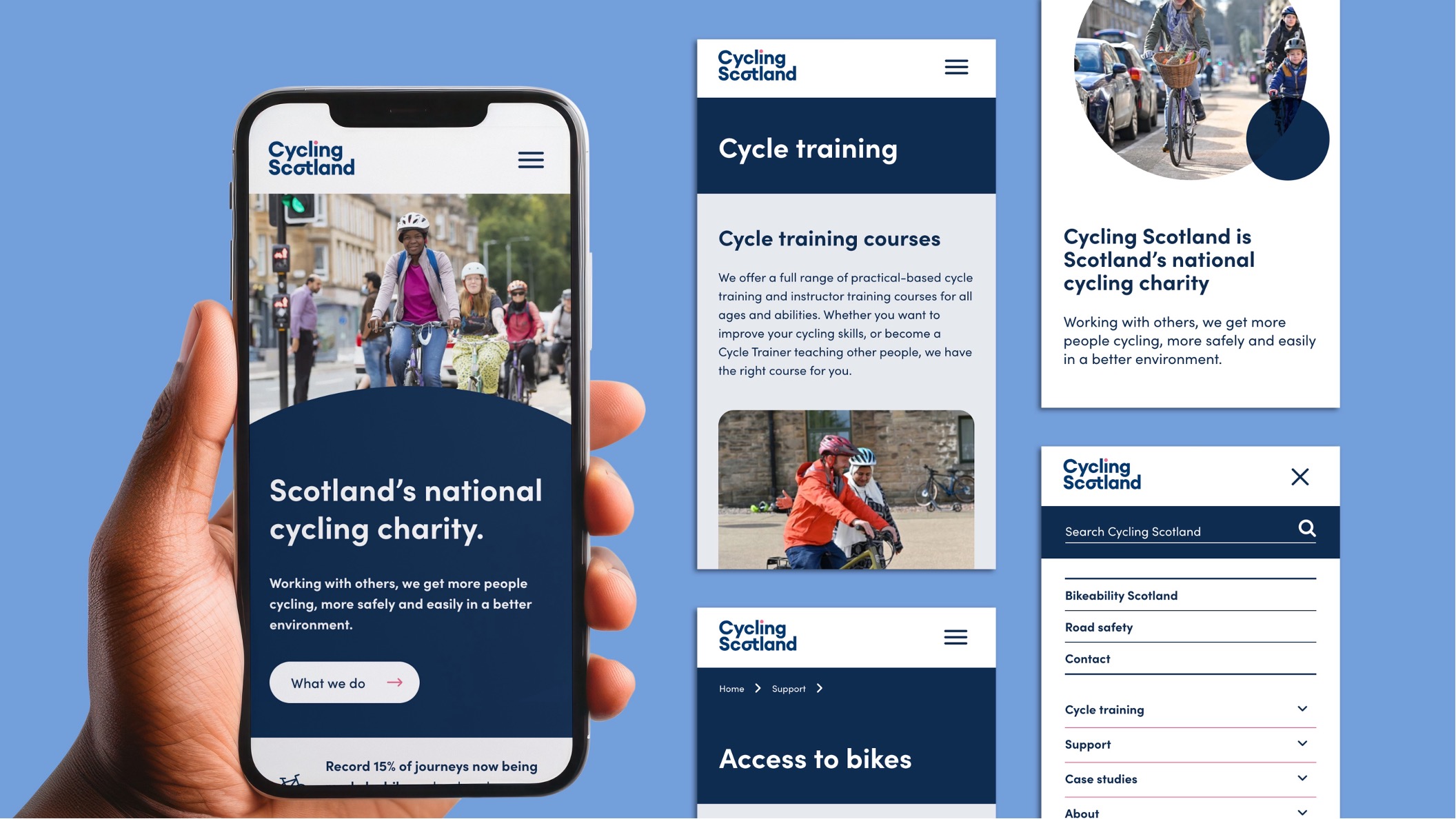
Working together we created a new site that works for everyone, from everyday cyclists to policy planners. We took our typical evidence-based approach; testing, iterating and improving as we delivered the project.
We re-platformed them to the flexible, user-friendly Umbraco CMS — implementing a refreshed design that simplifies navigation, showcases their work, and provides a tailored experience for different audiences.
The Challenge
Cycling Scotland’s old site was built on an unstable CMS that made updates difficult, and navigation unclear, frustrating both users and the internal team. Content was written from an internal perspective, which didn’t meet the needs of their varied audiences.
They needed a stable platform that improved user journeys, support for multiple sub-brands, and to meet accessibility standards (WCAG 2.2 AA) — all while reinforcing their role as a trusted leader in cycling advocacy.



The Solution
We held stakeholder workshops to begin to gather user needs, then user-tested our proposed new site structure with real-world users —taking an evidence-based approach to test, iterate and shape a structure that reflected real user needs. This led to clearer labelling, better content organisation, and more intuitive journeys.
A new design system was developed that closely aligned to Cycling Scotland's brand — developing a visual language that was engaging and accessible.
We built the new website using Umbraco v13, ensuring flexibility and ease of management and introduced features like reusable content blocks and a new mega menu.
Accessibility, mobile responsiveness, and performance were core to the build, all of which resulted in marked improvements.

More cycling. More often.
The result is a future-proof website that performs better, is easier to manage, and supports their mission of getting more people cycling, more often.
“The UX research activities were helpful for us, particularly in highlighting language that didn’t make sense to users. The reports provided detailed insights and recommendations for where the structure, content, language and labels could be improved to assist users in finding information easily.
This process gave us data to back up some choices we had already made, as well as showing us areas that needed a bit more thought – and giving us a helpful steer and useful recommendations on how to improve these.”
Sarah Cochrane, Digital Communications Officer, Cycling Scotland

While you are here, find out about our Digital Transformation of Cycling Scotland's Cycling Certification platform, and our Multi-award-winning campaign — Leave Space For a Life.